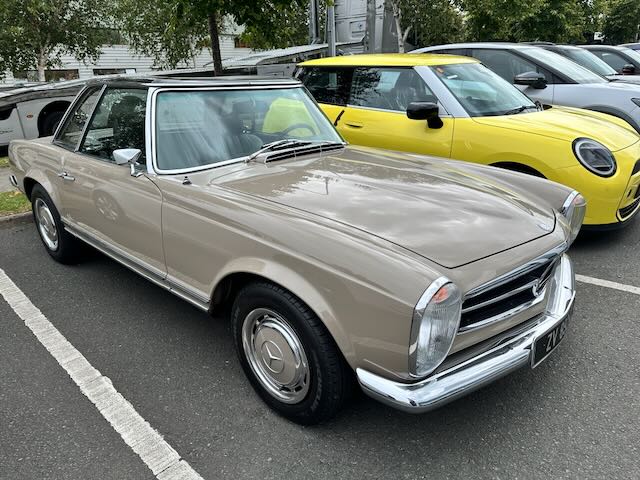
Hybrid and elective powered together in one picture the DS number 8 and number 4
I f you’ve ventured outside in Ireland over the last week, you’ll have noticed that the local Applegreen looks less like a service station and more like the set of a post-apocalyptic movie where the extras have run out of both patience and Tayto.
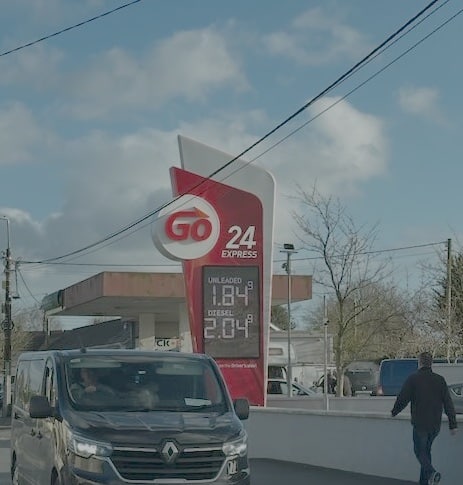
The fuel protests have turned our motorways into a very slow, very angry car park. Thanks to the latest “geopolitical misunderstandings” and the fact that oil is now seemingly as rare as a humble politician, diesel has hit €2.14 a litre. Filling up a mid-sized family car now costs the same as a long weekend in Marbella, and frankly, the Marbella trip would probably involve less weeping.
For a century, we’ve been powered by explosions. You put oily bits of ancient fern into a tank, set fire to them, and—pow—you’re at the shops. But the “wet fuel” era is entering its “old man in a pub telling stories” phase. It’s loud, it smells of 1974, and it is becoming ruinously, hilariously expensive.
The Cold, Hard Maths
I know, I know. “Maths” is a word that usually makes people want to go and lie down in a dark room with a damp cloth over their eyes. But look at these numbers before you dismiss the electric “washing machines” entirely.
If you take a standard diesel car, it’ll use about 6 litres of fuel to go 100 kilometres. At today’s eye-watering price of €2.14 per litre, that means you are spending €12.84 every time you cover 100km. Now, let’s look at the electric alternative. An EV uses about 18kWh of juice to cover that same 100km. If you’re sensible and charge it at home on a night rate of €0.16 per kWh, your cost is a measly €2.88.
That means, for every 100 kilometres you drive, you are handing over an extra €9.96 to an oil company just for the privilege of hearing a series of small explosions under your bonnet. If you do the average Irish mileage of 18,000km a year, your annual diesel bill is roughly €2,311, whereas your EV “fuel” bill is just €518. That is a saving of €1,793 a year—enough to buy a very decent second-hand jet ski, or perhaps several thousand breakfast rolls.
The “Washing Machine” Experience
Driving an EV is a bit like being in a library that has been strapped to a firework. There’s no roar, no drama, and no mechanical sympathy required. You just mash the pedal and suddenly you’re at 100km/h, and your internal organs are still back at the traffic lights wondering what just happened.
Yes, the upfront cost is still enough to make your eyes water—even with the €3,500 SEAI grant and the VRT relief. But with the 2026 shortages making “wet” fuel more volatile than a toddler in a toy shop, the EV offers something petrol can’t: Independence. If you have a plug at home, you are your own refinery. You don’t have to join a three-mile queue of angry men in Hi-Vis vests just to get to work. You simply plug it in, go to sleep, and wake up with a full “tank” for the price of a posh sandwich. You can even laugh—haughtily—as you drive past the queues of people fighting over the last drop of “Premium Unleaded.”
The Verdict
We are at a crossroads. You can stay with your diesel clatterbox and watch your bank account drain into the pockets of oil magnates, or you can buy a car that sounds like a Dyson but costs as much to run as a toaster. It’s a choice between the past and a future where you can actually afford to eat something other than boiled grass.
The world is changing, Ireland. It’s time to stop sniffing the fumes and start looking for a socket.
How many kilometres do you typically cover in a week, and do you have a spot at home where you could actually install a charger? Are you even bothered by what car you drive?
don’t forget that we buy any vehicle just click the link!