

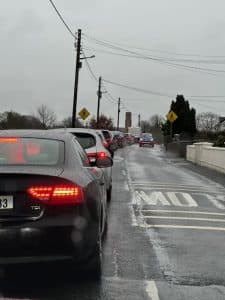
If you’ve filled up in the last 48 hours, you’ve seen the numbers. Petrol is currently averaging around €1.78 per litre, with diesel sitting narrowly behind at €1.75 although today I’ve seen €1.89 – €1.91. While we aren’t quite back at the record-breaking panic levels of a few years ago, the trend is heading in the wrong direction.
The primary culprit is the instability in the Middle East, specifically around the Strait of Hormuz. When global oil traders get nervous, they buy up futures, and that translates to a higher price for you at the Circle K in Mullingar. Brent Crude has been hovering in the mid-80s ($84-$86 per barrel), which is high enough to keep the “low fuel” light on our dashboards feeling like a personal threat.
Beyond the global markets, we have the “home-grown” costs. The Irish government’s commitment to the Climate Action Plan means the Carbon Tax is now a significant portion of what you pay. It’s currently at €71 per tonne, and while the intent is to push us toward EVs, for the lad driving a 2015 Transporter for work, it just feels like a very expensive nudge.
The €1,000 Hurdle: Home Heating Oil
The real sting, however, is being felt at the side of the house. For those of us still relying on kerosene to keep the toes warm, the “Grand Fill” has become a reality again. Prices for 1,000 litres of home heating oil are currently bouncing between €980 and €1,030 depending on where you are in the country.
It’s a psychological barrier as much as a financial one. Ten years ago, you could fill a tank for half that and still have change for a Sunday roast. Now, ordering oil feels like a major financial decision that requires a board meeting at the kitchen table. With the next Carbon Tax hike for fuels like kerosene scheduled for May 1st, many households are trying to time their final “winter” fill just right to avoid the extra squeeze.
The Breakdown: Where Does Your Money Go?
It’s a common Irish pastime to blame the garage owner, but the truth is their margins are razor-thin. Most of what you’re handing over goes straight to the Exchequer.
65% of the cost is tax. To keep it simple, here is what is currently eating into your fuel budget:
- Excise Duty: The standard flat-rate tax that makes up the bulk of the levy.
- Carbon Tax: Currently sitting at €71 per tonne. It added about 3 cent to a litre of fuel in the last round of hikes, and it’s set to keep climbing every year until 2030.
- VAT: A flat 23% applied at the very end—essentially a tax on top of all the other taxes.
- The NORA Levy: A small charge for the National Oil Reserves Agency to ensure we have emergency supplies.
- The Better Energy Levy: A small contribution toward green energy initiatives.
The Knock-on Effect
High fuel prices aren’t just about the car or the boiler; they’re a “stealth tax” on everything else. When diesel goes up, the cost of getting a loaf of bread to a Spar in Belmullet goes up. We’re seeing this reflected in “sticky” inflation at the supermarkets. Even as general inflation slows down, the high cost of transport keeps the weekly shop feeling heavier on the wallet than it should.
The Irish consumer is resilient—we moan, we adapt, and we eventually just pay it because we have to get to work—but there’s a sense of “cost-of-living fatigue” setting in. We’re not in a full-blown crisis yet, but we’re certainly in a period of “cautious driving” and turning the thermostat down a degree or two.
Unless we see a de-escalation in global tensions or a surprise intervention from the Minister for Finance, “staying mobile” is going to remain one of our biggest monthly expenses for the foreseeable future.


