It’s a big day for the Irish forecourt. If you’ve been holding off on a fill-up until this morning, March 25, 2026, your patience (and that near-empty fuel light) might finally pay off.
The government has officially pulled the emergency brake on spiraling costs. As of midnight, we’ve seen the rollout of a €250 million emergency package specifically designed to stop the €2.00+ litre from becoming the “new normal.”
The “Today” News: The Midnight Slash
In a move that’s been described as a “breathing room” measure, the Dáil has pushed through a significant cut to excise duty. Here’s what’s changing at the pumps today:
- Diesel: Dropping by 20c per litre.
- Petrol: Dropping by 15c per litre.
- NORA Levy: A separate proposal to suspend the 2c National Oil Reserve Agency levy is also on the table, though it’s currently clearing the final legislative hurdles.
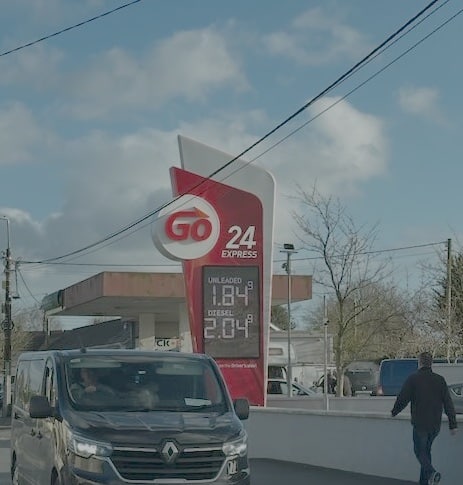
However, don’t be surprised if your local station hasn’t changed the sign just yet. Retailers have warned that because they bought their existing stock at the higher “pre-cut” price, it could take anywhere from two to ten days for the full reduction to wash through to the consumer. If you see a station still charging €2.05 today, they aren’t necessarily “gouging”—they’re likely just emptying their expensive tanks.
The Context: Why the Panic?
The reason for this sudden government intervention isn’t just “general inflation.” It’s a direct reaction to the escalating conflict in Iran and the resulting chaos in the Strait of Hormuz. With 20% of the world’s crude oil currently navigating a geopolitical minefield, global markets have been hysterical.
Before this morning’s cut, we were looking at a grim reality: national averages for diesel had hit €1.90, with several stations in Dublin and Cork reporting prices as high as €2.12. For the Irish commuter, the “war at the pump” felt very personal.
The New Breakdown: Even with today’s 20c cut, taxes still make up more than half of your fuel bill. Between VAT at 23% and the Carbon Tax (currently €71 per tonne), the government remains the biggest winner every time you click the nozzle.
The Great Pivot: Is Petrol Finally Losing?
While the headlines are focused on the excise cut, the real story is in the registration plates. According to the latest SIMI data released this month, electric vehicles (EVs) are now on the verge of overtaking petrol cars for the first time in Irish history.
As of March 2026, EVs hold a 20.5% market share, trailing petrol by a mere 600 registrations. While petrol and diesel drivers are checking the news for tax breaks, EV owners are enjoying a rare moment of price stability. With home-charging rates remaining relatively flat compared to the volatility of global oil, the economic argument for switching has never been louder.
Future Predictions: Stability or Short-term Fix?
The big question is: what happens in June? These excise cuts are currently scheduled to expire at the end of May 2026.
- The “Cliff Edge” Risk: If the situation in the Middle East hasn’t cooled down by June, the government will face a massive political headache. Reintroducing 20c of tax overnight could cause a “fuel shock” that makes today’s prices look cheap.
- The Rise of the Hybrid: While full EVs are surging, hybrids now account for 64% of the total Irish market. This suggests that while we aren’t all ready to “plug in” yet, the Irish driver has officially given up on the pure internal combustion engine as a long-term strategy.
- The €100 Carbon Target: Regardless of today’s emergency cuts, the legal roadmap to 2030 remains. The government still plans to hike carbon tax to €100 per tonne by the end of the decade. Today’s relief is a detour, not a change in destination.
The Verdict
Today is a win for the wallet, but it’s a fragile one. We’ve bought ourselves a few months of slightly cheaper motoring, but we’re still tied to a global oil market that’s one headline away from another spike. If you’re filling up today, enjoy the 20c discount—but keep an eye on the horizon. The era of cheap fossil fuels isn’t coming back; it’s just being subsidized for a little while longer.
If you have a car you no longer want then get in touch with the number attached and save some money on fuel!